The Virtual Office Revolution: Microsoft Office Enters the Realm of Meta Quest Headsets
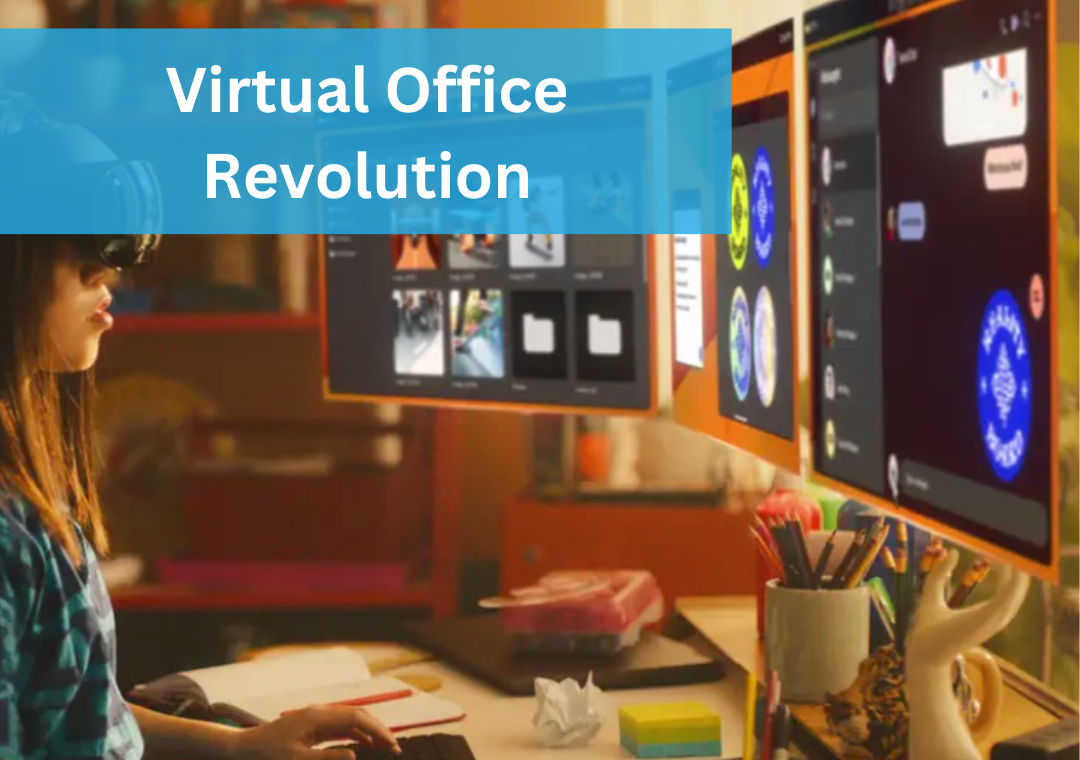
In this blog post, we delve into the groundbreaking integration of Microsoft Office applications—Word, Excel, and PowerPoint—into Meta’s Quest headsets, marking a significant leap in the field of mixed and virtual reality (VR). This integration, first announced at Meta Connect in 2022 by Meta CEO Mark Zuckerberg and Microsoft CEO Satya Nadella, has brought these popular productivity tools into a new dimension, offering users the ability to access them in VR and mixed reality environments.
After over a year of development, these Office apps, hosted as web versions in the cloud, have been made generally available on Quest, Quest 2, Quest, and Quest Pro headsets. This advancement enables users to view apps on up to three virtual screens and interact with them through hand-tracking gestures or a Bluetooth-connected keyboard and mouse, catering to different preferences and tasks.
Despite this innovation, the transition from traditional laptops to mixed-reality devices for office work is still in its early stages. Analysts and testers, like Avi Greengart from Techsponential, point out current limitations such as device resolution, mixed-reality passthrough quality, and the practicality of handheld controllers. However, the potential for practicing presentations, particularly in PowerPoint, is a notable advantage, with suggestions for further improvements like a teleprompter mode.
The expectation is that as the hardware continues to evolve, mixed reality will become increasingly suitable for productivity. The upcoming release of Apple's Vision Pro has reignited interest in spatial computing, which has potential applications in both work and entertainment. These advancements suggest that working in VR could lead to new productivity gains, either through a multi-monitor setup or unique software capabilities designed specifically for mixed-reality environments.
While Quest devices have primarily targeted gaming and entertainment, Meta has also been focusing on workplace productivity through applications like Horizon Workrooms and hardware innovations like the Quest Pro. Additionally, Meta's introduction of Quest for Business, a device and app management platform, aims to simplify deploying headsets to employees.
Currently, the most common business use cases for VR and mixed reality involve education, training simulations, and industry-specific applications. Raúl Castañón, a senior research analyst at 451 Research, a part of S&P Global Market Intelligence, notes that it is still early days for Office productivity tools in mixed reality environments, with most applications being industry or use case-specific.
The integration of Microsoft Office tools into mixed reality devices is seen as a logical progression, with these tools evolving into cloud-based, real-time collaborative platforms. Moreover, nearly half of the respondents in a recent S&P Global survey anticipate that existing enterprise collaboration and communication tools like Microsoft Teams and Zoom will be enhanced with metaverse capabilities.